

Key Projects
Early Cancer Detection
Our pioneering research focuses on non-invasive, highly accurate cancer screening methods using advanced bioengineering and molecular analysis.
Early Cancer Detection: A Breakthrough in Diagnostics
With cancer being one of the leading causes of death globally, early detection is crucial for improving treatment outcomes and reducing mortality rates. Traditional screening methods often fail to detect cancer at early stages (0-I), making the need for innovative solutions urgent.
At D-Tails, we have developed a groundbreaking approach using C. elegans nematodes to detect volatile organic compounds (VOCs) specific to cancerous cells. The nematodes' olfactory system can identify these compounds even at nanomolar levels, allowing for early detection of cancers such as breast, prostate, pancreatic, and more. In clinical studies, this method has demonstrated over 97% accuracy, outperforming conventional biomarkers.
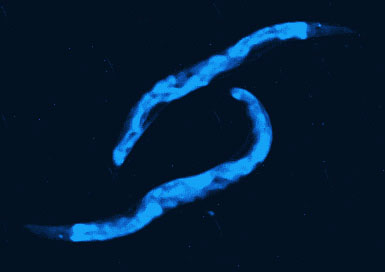
D-Tails is working to develop a user-friendly, high-throughput screening kit based on our research with C. elegans. This kit aims to revolutionize early cancer detection, making it affordable, accessible, and accurate for use worldwide.
Project Milestones
Discovery of VOC Sensitivity in Nematodes
November 2019
In our initial research, we uncovered the ability of C. elegans to detect cancer-specific VOCs in biofluids with unprecedented sensitivity.
Clinical Trials with 97% Accuracy
February 2020
Through extensive trials, we validated our method, achieving over 97% accuracy in detecting early-stage cancer using biofluid samples.
Development of High-Throughput Test Kit
2022 - Present
We are currently focused on converting this research into an affordable test-kit compatible with high-throughput formats for early cancer screening.
Papers
Our published studies advancing the science of early cancer detection and screening
Identification of Cancer-Specific Volatile Organic Compounds (VOCs) in Breast and Prostate Cancer
This foundational study identifies unique VOC signatures in breast and prostate cancer, forming the basis for olfactory-based cancer detection.
Biofluid Screening for Early-Stage Cancer Detection Using C. Elegans
A novel method utilizing the olfactory capabilities of C. elegans to detect cancer at early stages through biofluid analysis.
High-Throughput Nematode Screening for Cancer Diagnosis
This research outlines the development of a high-throughput platform for scalable, non-invasive cancer detection using nematode behavior.
Neuronal Response to Cancer VOCs in Nematodes: Mechanisms and Implications
A deep dive into the neuronal pathways activated in C. elegans in response to cancer-specific VOCs, paving the way for precise screening tools.
Pan-Cancer Screening: VOC Profiles for Lung, Pancreatic, and Colon Cancer Detection
This study expands the use of VOC detection to other major cancers, including lung, pancreatic, and colon, using the same olfactory mechanisms.
Molecular Pathways Mediating Cancer Detection Behavior in Nematodes
Uncovers the molecular mechanisms behind the olfactory response of C. elegans to cancer VOCs, providing insight into bioengineering solutions for diagnostics.
Accuracy of C. Elegans-Based Cancer Screening vs. Conventional Biomarkers
A comparative study showing the superior accuracy of C. elegans-based screening methods over traditional cancer biomarkers in clinical trials.
Development of VOC-Based Diagnostic Kits for Breast Cancer Screening
Describes the creation of a cost-effective, non-invasive diagnostic kit utilizing VOC detection for early breast cancer screening.
Integration of VOC Detection with AI: Enhancing Cancer Screening Sensitivity
A cutting-edge study on integrating AI with VOC detection to improve the sensitivity and accuracy of cancer diagnostics using machine learning algorithms.
Olfactory-Based Detection of Prostate Cancer: Clinical Trial Results
Presents the results of clinical trials using nematode behavior to detect prostate cancer, with a focus on accuracy and non-invasiveness.
VOC-Based Cancer Detection: Reducing the Cost of Screening Programs
Explores how VOC detection technology can lower the cost of cancer screening programs while increasing accessibility to early diagnostics.
Bioengineering Advances in High-Throughput Cancer Screening
Outlines the latest bioengineering innovations that enable high-throughput screening for cancer using nematode olfactory systems.
Real-World Application: Breast Cancer Detection
In recent clinical trials, we successfully demonstrated that C. elegans can detect volatile organic compounds in biofluids from breast cancer patients with over 97% accuracy. This ability to sense cancer biomarkers early on positions our method as a vital tool in the future of oncology diagnostics.
Our next challenge is scaling this technique to apply to other cancer types, including prostate and pancreatic cancer, with ongoing research into expanding the capabilities of the test-kit for high-throughput applications.

Bibliography
Discover the key research contributions that are pushing the boundaries of early cancer detection.
Cancer-Specific VOC Identification
Our team identified cancer-specific VOCs in breast, prostate, and pancreatic cancers, forming the foundation for our detection method.
Nematode Behavior Analysis
Through advanced bioengineering, we linked nematode behavioral responses to cancer-related VOCs, enabling a novel approach to cancer screening.
Non-Invasive Screening Development
We are developing a non-invasive, high-accuracy screening test that uses biofluids, offering a less costly alternative to traditional diagnostics.
Biofluid VOC Profiling for Early Lung Cancer Detection
An extension of our research into lung cancer detection, highlighting the VOC profiles unique to lung cancer and their early identification.
Pancreatic Cancer Early Detection Using VOC Analysis
A groundbreaking study on how pancreatic cancer VOCs can be detected at early stages using nematode behavior as a bio-sensor.
Machine Learning Integration for Cancer Detection Accuracy
Exploring the role of machine learning in enhancing the accuracy of cancer detection by analyzing nematode responses to biofluids.
Clinical Validation of C. Elegans for Prostate Cancer Detection
Results of clinical trials validating the effectiveness of using C. elegans as a bio-sensor for detecting prostate cancer through biofluid analysis.
Olfactory Sensitivity of C. elegans: Mechanisms and Applications
A detailed investigation into the olfactory sensitivity of C. elegans and how it applies to cancer detection through volatile organic compounds (VOCs).
Scaling VOC-Based Screening for High-Throughput Cancer Testing
A technical paper discussing the development of scalable, high-throughput VOC-based cancer screening platforms for large populations.
Cancer-Specific VOCs in Human Biofluids: A Comprehensive Review
A review of the unique VOC profiles associated with different types of cancer, and how these are used in early diagnostic applications.
Expanding VOC Detection to Colon and Liver Cancer
This study expands the application of VOC detection to colon and liver cancer, showing early-stage detection efficacy in laboratory models.
Nematode-Mediated VOC Detection: Implications for Public Health
A discussion on the public health implications of scalable, nematode-mediated cancer screening as an affordable and accessible diagnostic tool.
Support the Development of Innovative Cancer Screening
Join us in advancing early cancer detection technology.
Contact us to learn more about our research or request a collaboration.